Field essay 01 / Land and permission
Reading Estate Access
Private access describes who may enter. It does not, by itself, tell you what happens to wildlife once photographers arrive.
Start with the boundary, not the brochure
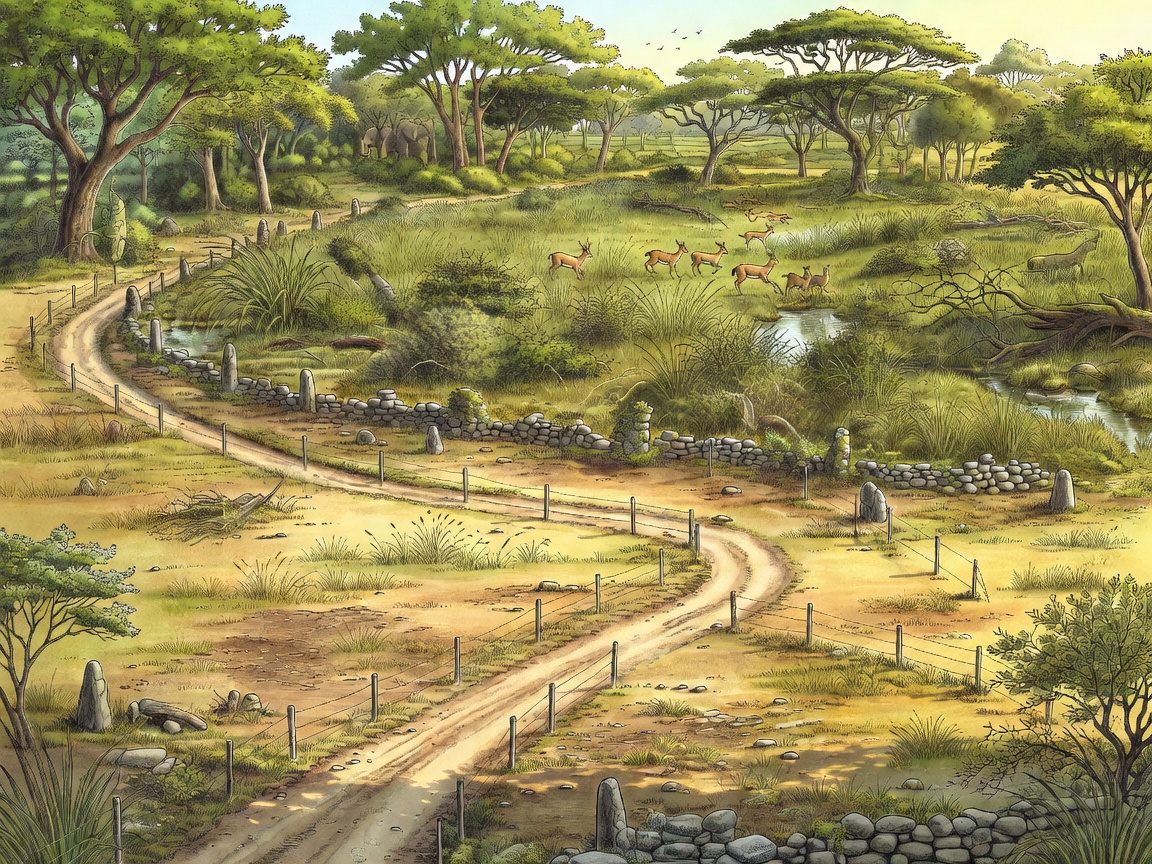
An estate may control a hide, a network of tracks or a much larger reserve. These are different offers. Ask for the geographical scope of your access and the activities it covers. A private vehicle does not necessarily mean exclusive use of a sighting; a private hide may still overlook land used by other groups.
South Africa’s Sabi Sand Nature Reserve, the wider Greater Kruger landscape, Scotland’s Cairngorms and Spain’s Extremadura illustrate how varied the word “private” can be. These are regional reference points, not recommendations or statements about current visitor access. Land tenure, conservation designations and local rules must be checked separately.
Request the operating business’s name, its relationship to the landowner and the permissions relevant to your planned activity. If a subcontractor provides the guiding, establish whose rules apply. Written clarity is more useful than a broad assurance that everything is arranged.
Examine what makes the hide work
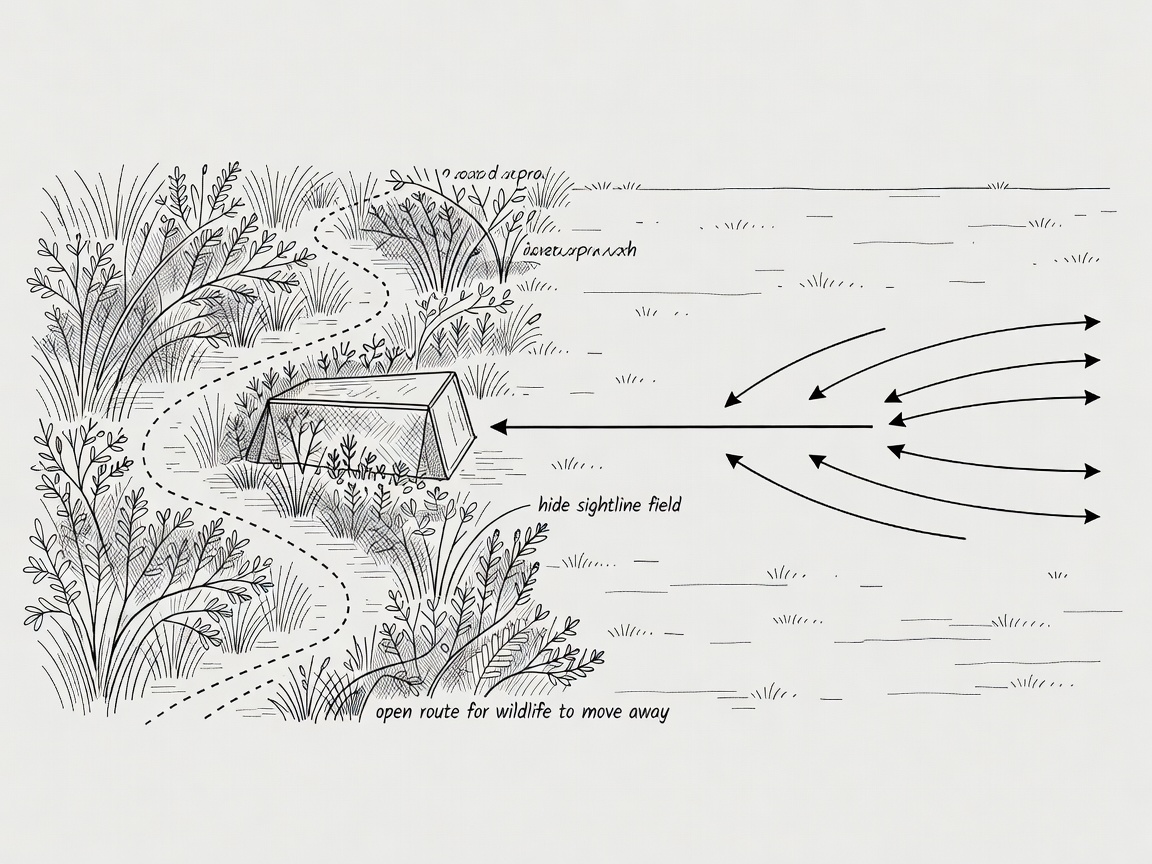
A well-positioned hide can reduce visible human movement and allow patient observation. Its effect depends on the approach path, entry times, ventilation, viewing slots and the animals’ previous experience of it. Ask whether guests enter before activity begins and whether leaving early would require crossing an active feeding area.
Find out what attracts wildlife. Natural water, managed water, supplementary food, carcasses and audio playback create different welfare and disclosure questions. Feeding is not a single uniform practice: species, season, quantity, hygiene and dependency all matter. Do not assume that an attractive photograph reveals the method used to make it possible.
Ask how equipment is cleaned around shared feeding or drinking sites, and what triggers a pause in operation. Where birds gather closely, disease precautions deserve a specific answer. The ability to stop using a hide can be more reassuring than a statement that it runs every day.
Compare the promise with the evidence
Useful answers describe procedures. “We care about nature” gives you little to assess. A policy that explains when vehicles retreat, where walking is prohibited and who can cancel an encounter gives you something concrete. Do not demand a universal viewing distance: safe and lawful distances depend on species, behaviour, terrain and jurisdiction.
| Offer | What to verify |
|---|---|
| Exclusive hide | Exclusive for which hours, with how many seats, and overlooking which land? |
| Off-road access | Where is it permitted, and what soil, vegetation or animal conditions stop it? |
| Close encounters | Who controls approach, and what behaviour ends the observation? |
| Conservation contribution | Which named activity receives support, and what evidence is available? |
Keep conservation claims separate from the quality of the photography. A productive hide does not prove habitat benefit. Equally, an estate doing useful restoration may offer difficult photography. Ask about management actions, monitoring and the limits of what the operator can substantiate.
Recognise a reason to walk away
Repeatedly moving an animal for a cleaner background, blocking an escape route or continuing after obvious avoidance should prompt a stop. Nesting sites require particular caution. In the United Kingdom, protections under the Wildlife and Countryside Act 1981 can apply beyond the landowner’s consent; some activities involving protected species require licensing. Other countries have their own legal frameworks.
Do not treat a permit as a general ethical approval. A permitted activity can still be poorly timed or unnecessarily intrusive. Conversely, a photographer should not improvise a rescue or intervention without competent advice simply because an animal appears vulnerable.
Make uncertainty part of the agreement
Before booking, read the cancellation terms, weather provisions, accessibility information and restrictions on commercial image use. Ask what happens when a hide is closed for welfare reasons and whether an alternative changes the cost. These details protect expectations without pressuring a guide to produce a particular animal.
Record the answers alongside your photographic aims. If your desired picture requires behaviour the operator cannot responsibly offer, change the picture. Exclusive access is most useful when it buys time and space, not an exception to restraint.
Source notes: consult the Wildlife and Countryside Act 1981, NatureScot and Natural England for relevant UK guidance. Laws and permissions vary by location; obtain current local advice. Place names here are context, not endorsements or verified access listings.