Field essay 02 / Judgement beside the camera
Working Beside a Wildlife Guide
The guide’s most valuable decision may be the one that prevents a photograph. Establish that authority before the first sighting.
Separate field competence from camera tuition
A wildlife guide and a photography tutor can bring different skills. One may understand tracks, animal behaviour and emergency procedures; the other may be particularly useful with exposure, autofocus and image review. Some people combine both roles well. Do not infer that combination from a portfolio alone.
Ask who will actually accompany your group, not just whose name appears on the itinerary. Establish their familiarity with the habitat, the target species and the season of your visit. A guide experienced in the Maasai Mara may still need local support in the Okavango Delta. Neither landscape is interchangeable with a woodland hide in Finland.
Qualifications should be relevant to the country and the activity. In southern Africa, FGASA is a useful organisation to understand, but a membership claim is not a substitute for checking the individual’s qualifications, applicable registration and authorised scope. Walking, driving and specialist activities can require different competencies.
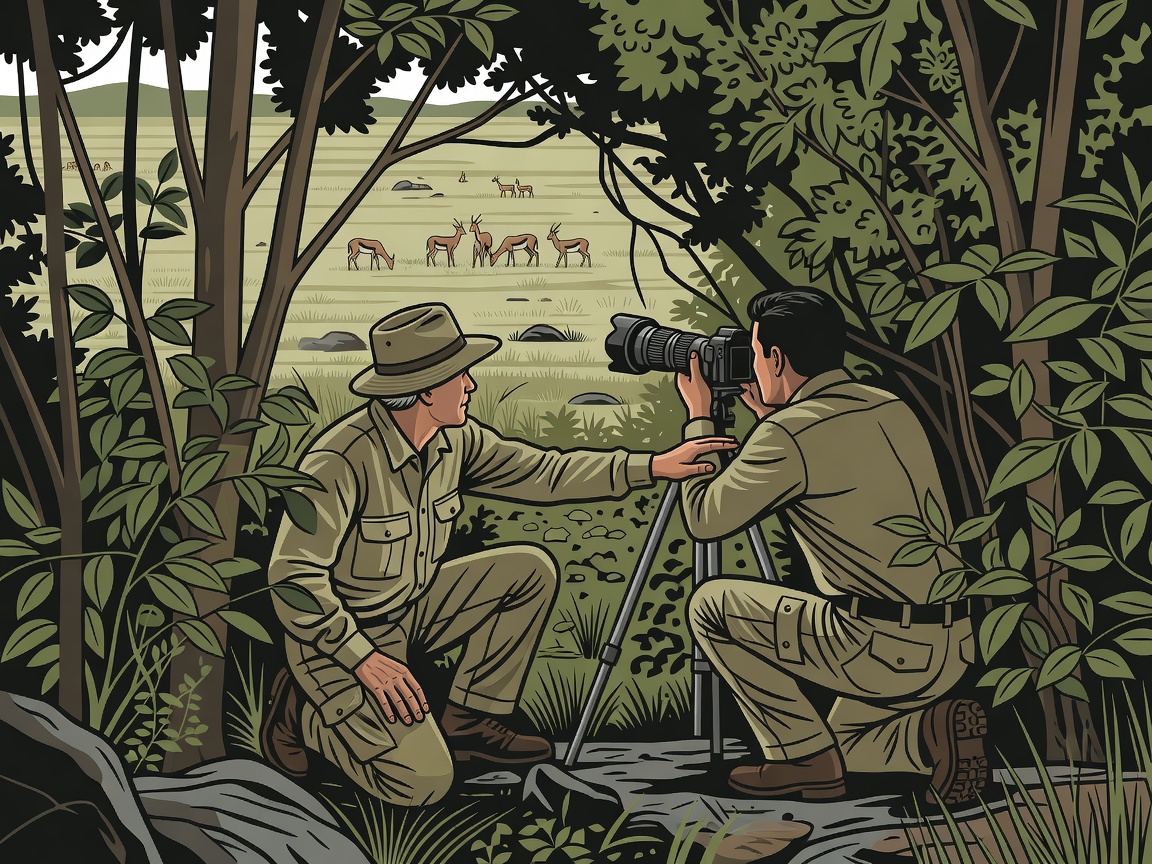
Listen to the briefing before the shutter
A useful briefing explains what to do when an animal approaches, when to stay seated, how to handle a sudden departure and how to communicate without raising voices. It should also tell you what not to carry, where equipment can be placed and when changing seats is unsafe.
Discuss camera sound, artificial light and playback before using them. A silent electronic shutter can reduce noise, but it does not make an approach harmless. Flash and continuous lighting require an explicit discussion of species, circumstances and local restrictions. Playback can alter behaviour even when no person is visible.
Ask how the guide recognises a need to increase distance. There is no single list of signals that works for every species. Repeated interruption of feeding, changed direction or sustained vigilance may be meaningful, but interpretation requires context. Your role is not to overrule a cautious withdrawal because the animal appears calm through a lens.
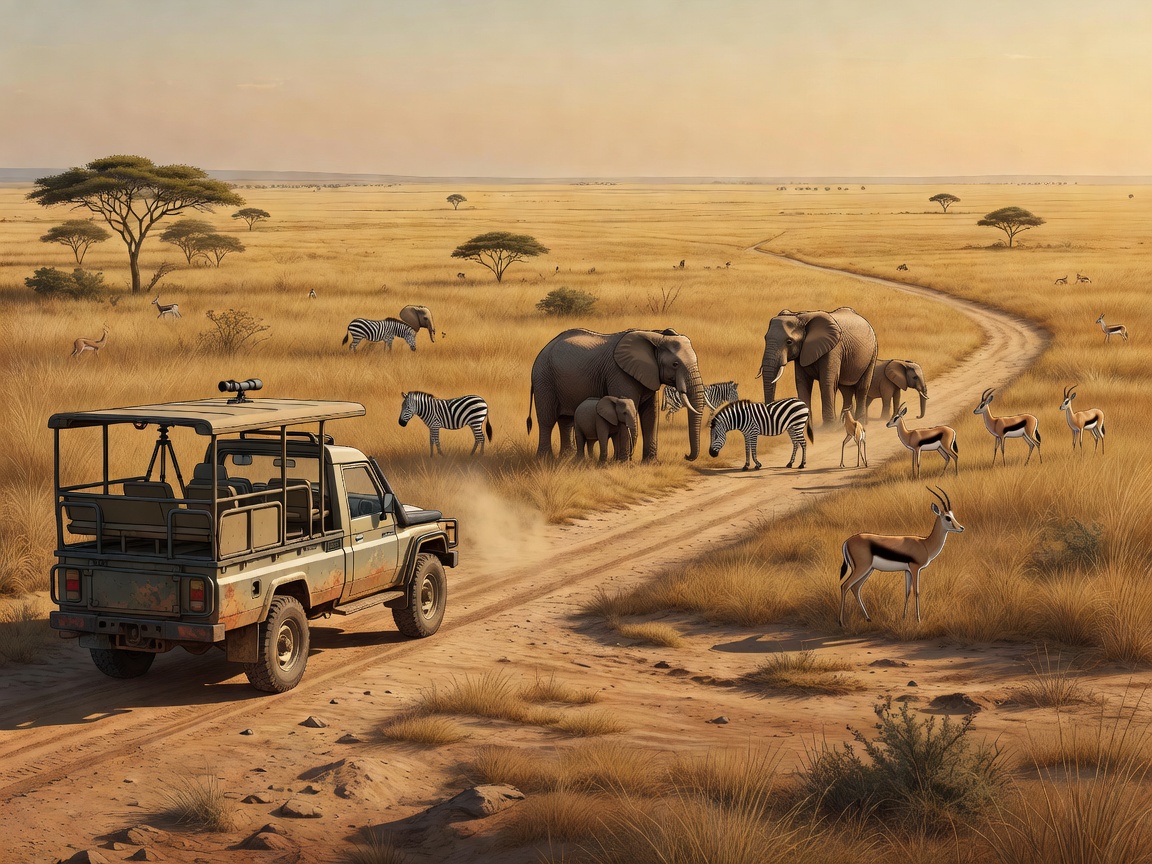
Agree how a shared vehicle will work
Photographic frustration often comes from a practical mismatch rather than a rare species failing to appear. Ask about passenger numbers, window access, seat rotation and equipment supports. Clarify whether every guest has the same priorities. Someone hoping for birds in flight may want a different pace from someone studying a resting leopard.
A private vehicle can offer flexibility, but it does not give its occupants priority over other visitors or management rules. Establish who communicates at a busy sighting and how long the group normally stays. Waiting quietly can produce better observations than repeatedly repositioning to improve a background.
If you need an accessible boarding arrangement, regular breaks, hearing support or assistance with equipment, describe the specific requirement. “Suitable for everyone” is not an adequate answer. Request measurements or photographs of the actual vehicle and facilities where those details affect your decision.
Ask about the difficult afternoon
Good weather and an easy sighting reveal little about contingency planning. Ask what happens when a track floods, a guest becomes unwell or communication fails. Identify who carries first-aid equipment, how help is requested and what limitations arise from remoteness. Do not assume mobile reception or rapid evacuation.
Discuss the boundary between reasonable photographic flexibility and unsafe pressure. A guide should be able to end an activity without having to win a debate about the cost of the trip. An operator should also provide a route for raising concerns afterward, especially if the guide’s behaviour is the concern.
Make your own part explicit
Tell the guide which images interest you, then invite alternatives. Environmental portraits, tracks, habitat details and ordinary behaviour are worthwhile subjects when a close approach would be inappropriate. A clear photographic brief helps only if it leaves room for field judgement.
Keep your equipment within the space agreed, follow instructions promptly and avoid giving another guest conflicting safety advice. If you feel unsafe or believe an animal is being pressured, say so plainly and ask to pause. Afterward, record the circumstances accurately rather than speculating about motives.
The strongest guiding relationship is not a promise that every request will be met. It is a shared understanding of what will happen when the right answer is no. That understanding makes space for patient photography without turning wildlife into an appointment.
Source notes: FGASA provides information about its qualifications and membership. BirdLife International offers broader bird conservation context. Neither organisation is presented as approving this website or any unnamed operator. Verify local legal and professional requirements directly.